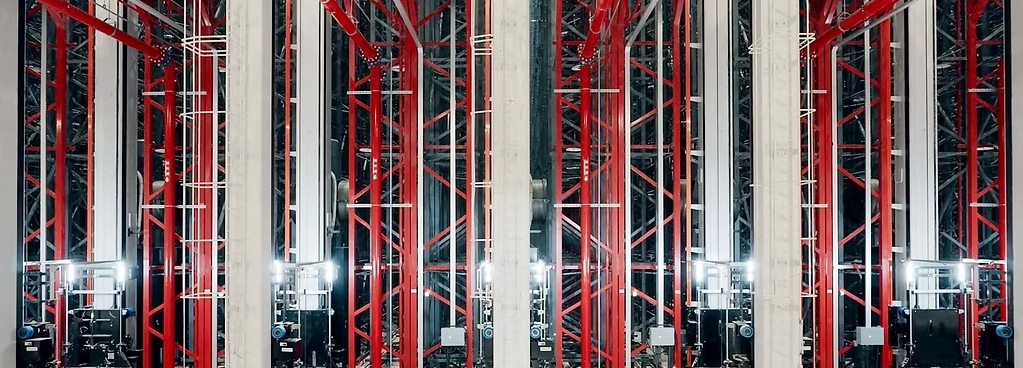
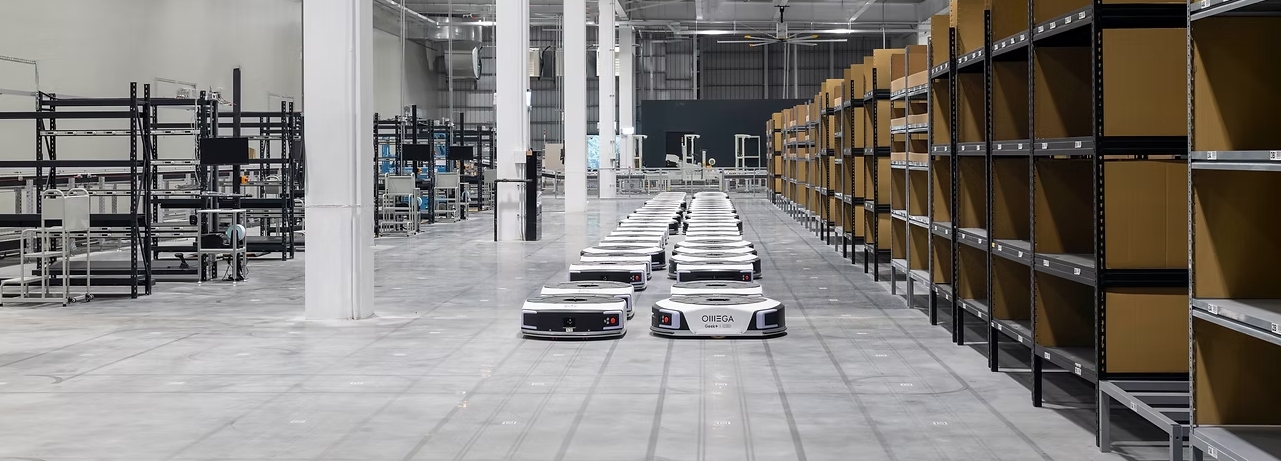
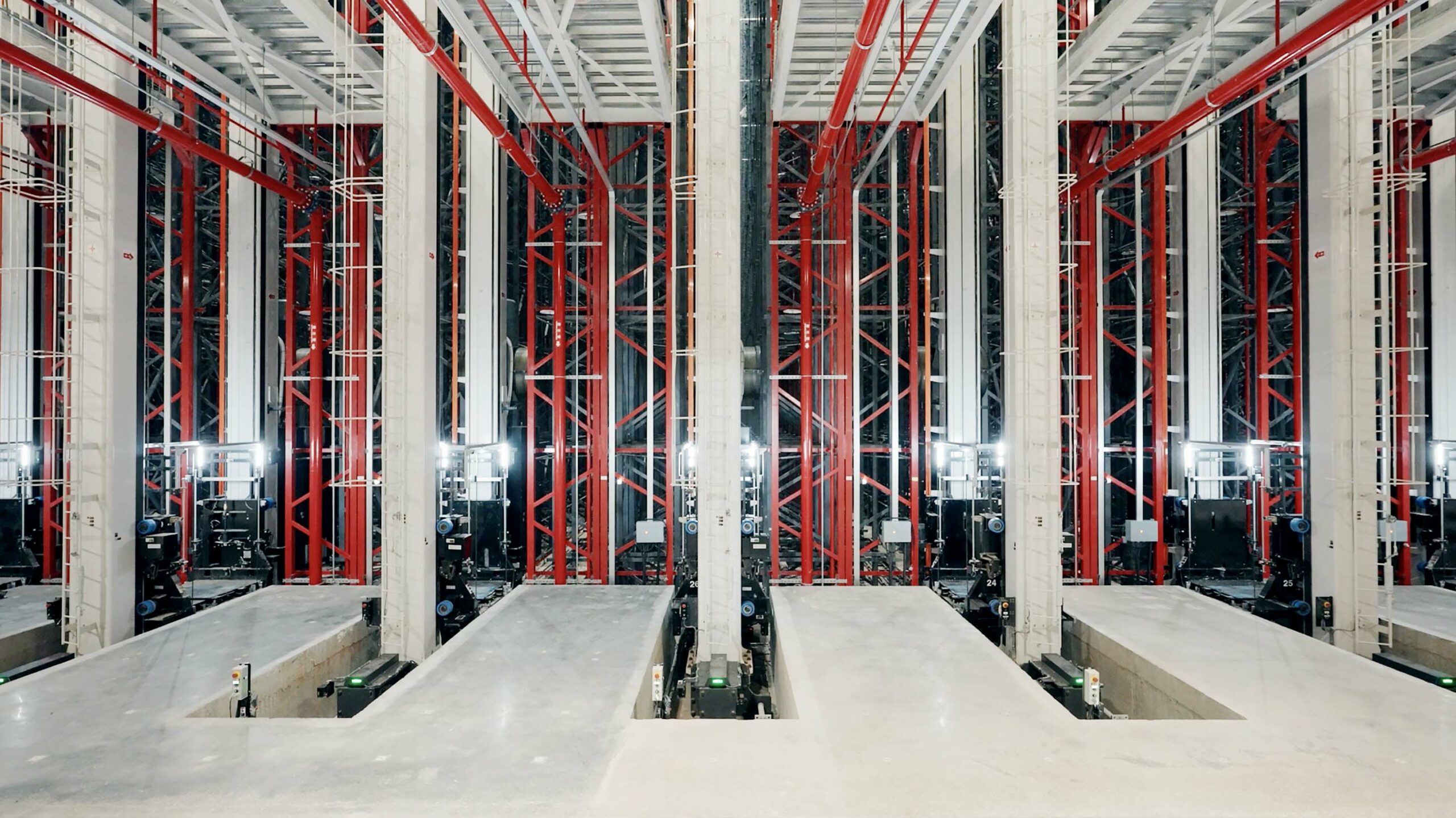
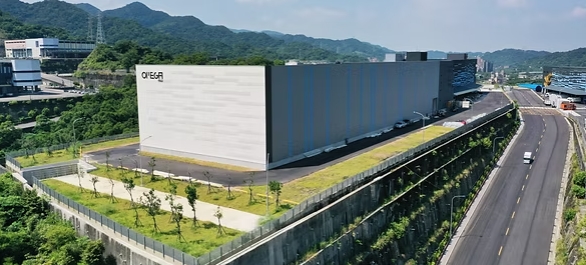
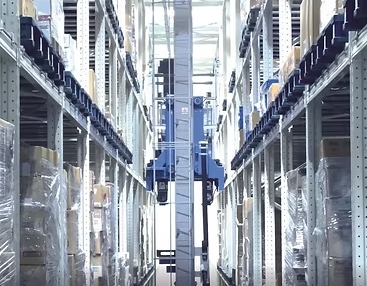
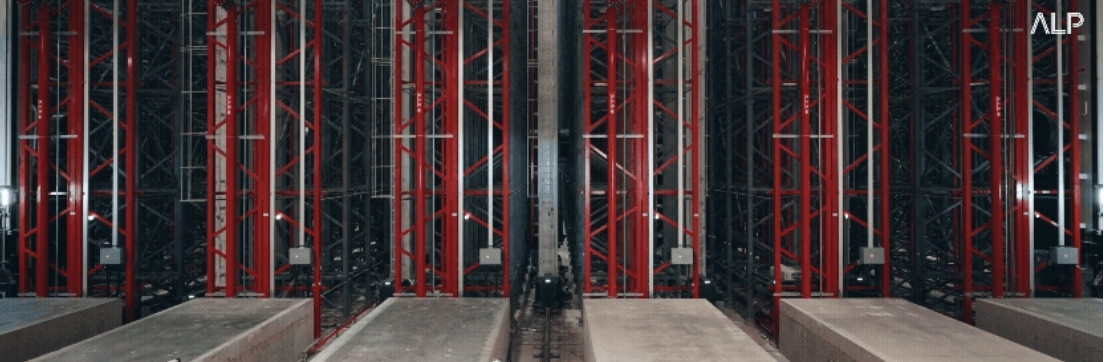
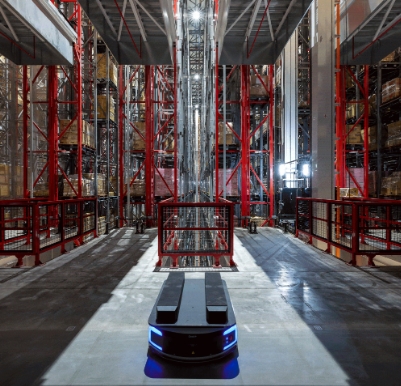
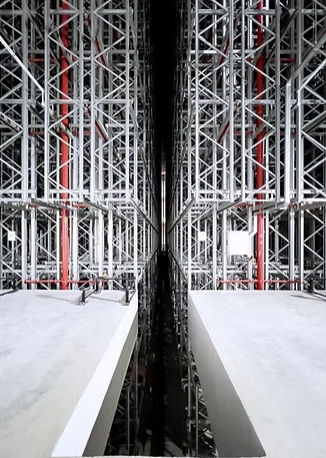
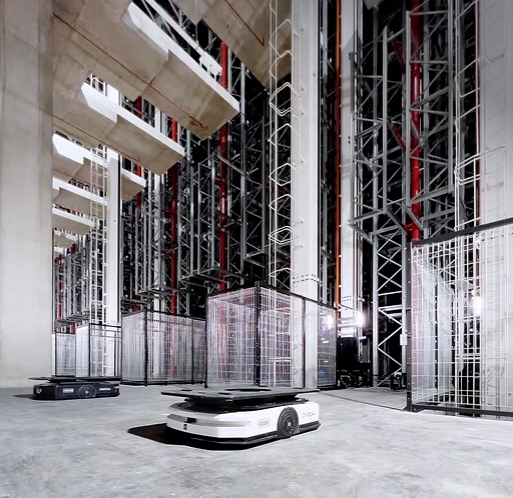
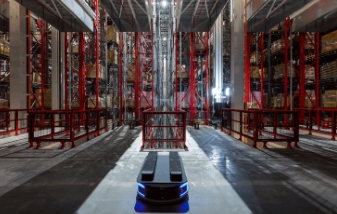
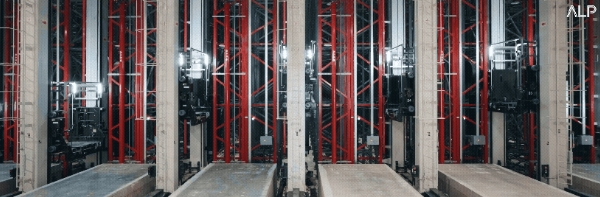
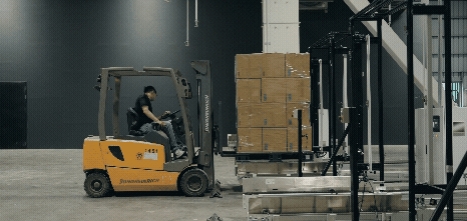
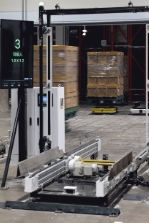
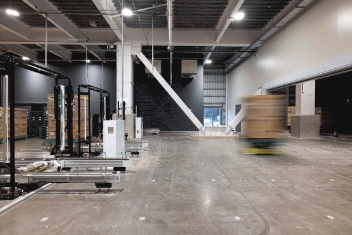
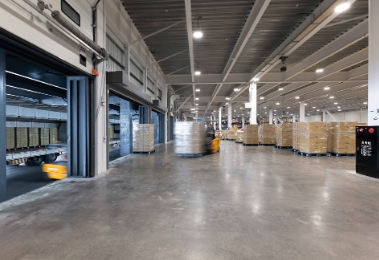
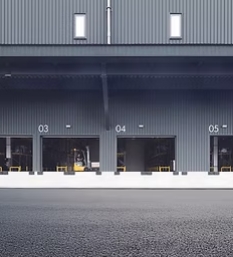
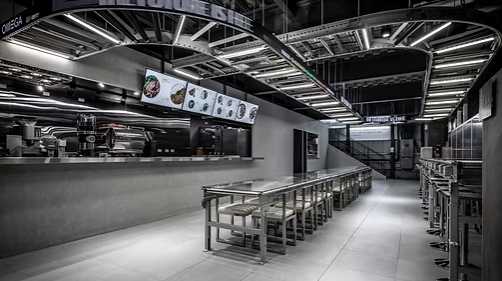
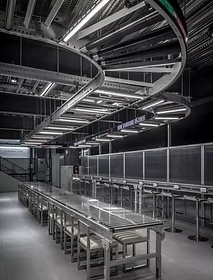
The AS/RS handles 30,000 pallet moves per day with 75–150x human efficiency and 99% accuracy, dramatically reducing errors.
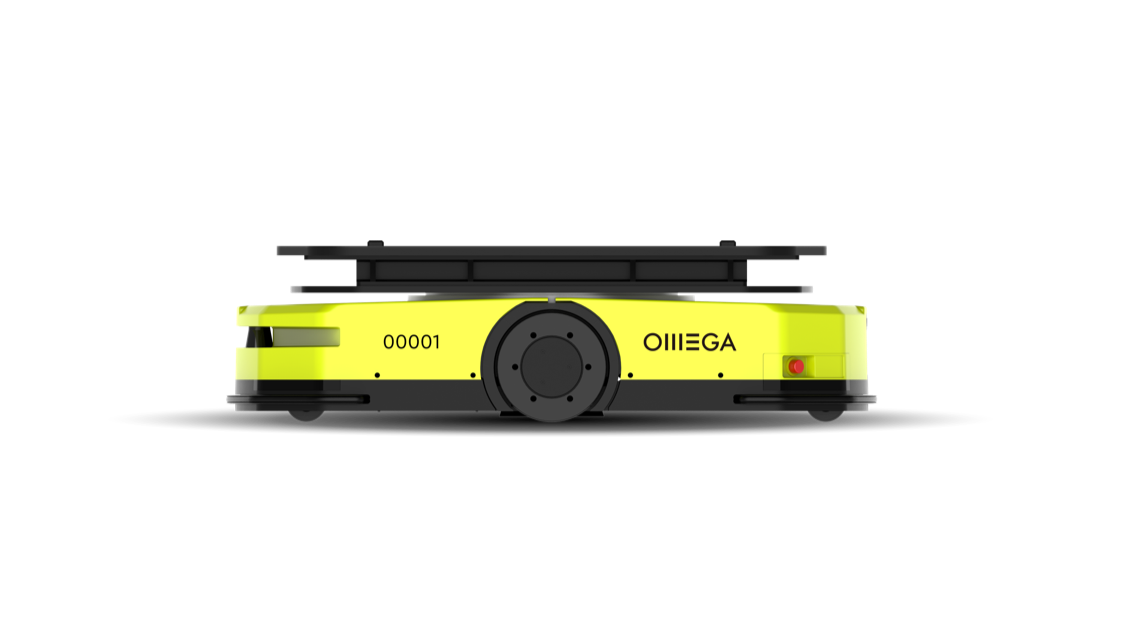
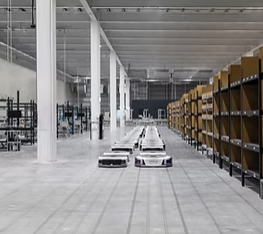
Agv efficiency +50%
With 100+ AGVs equaling 200–300 workers, automated routing boosts overall efficiency by 30–50%.
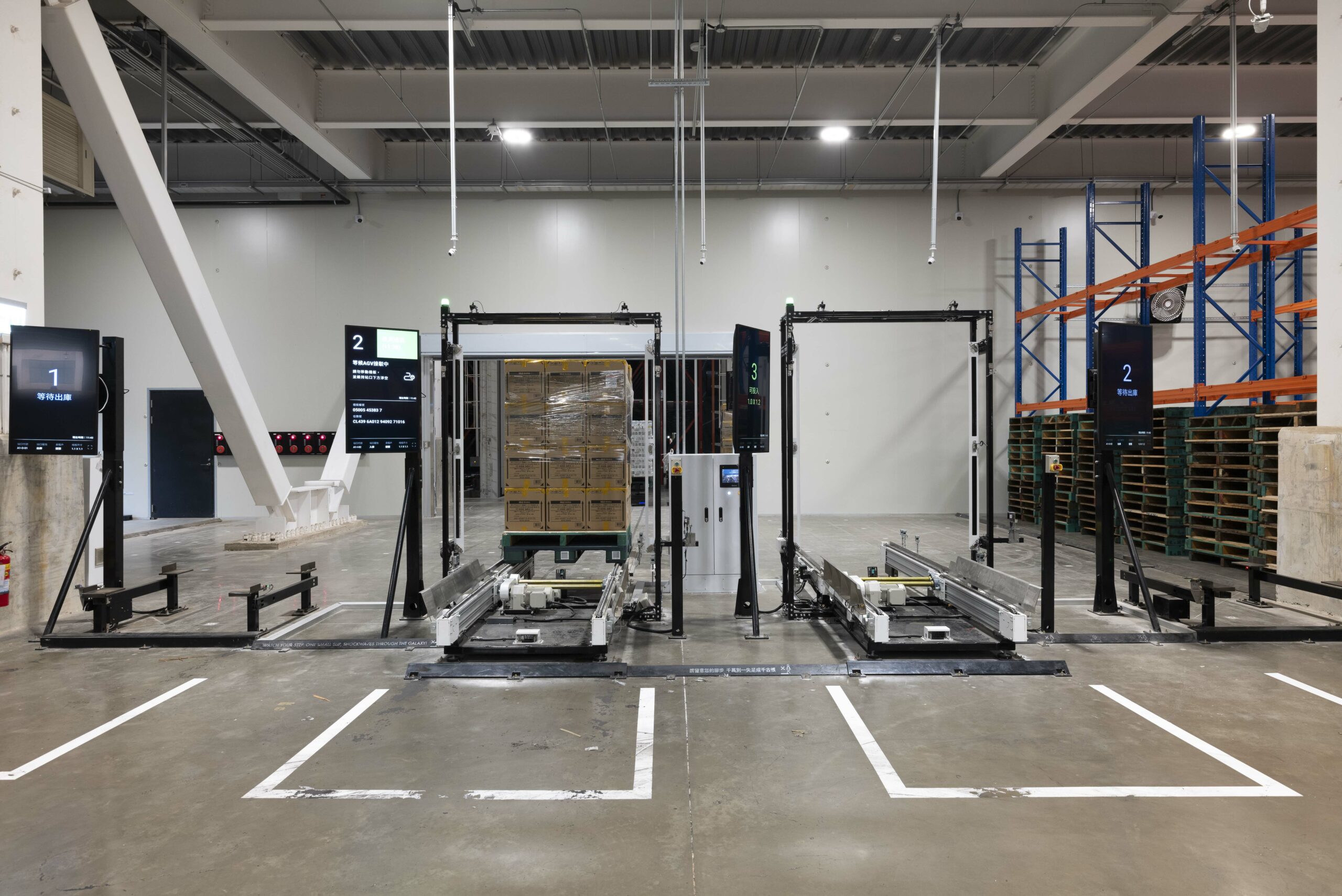
I/O-PORT 5x FASTER
I-Port/O-Port completes in/outbound in 1–2 minutes, 3–5x faster than manual work, with 24/7 multi-level operations beyond traditional limits.
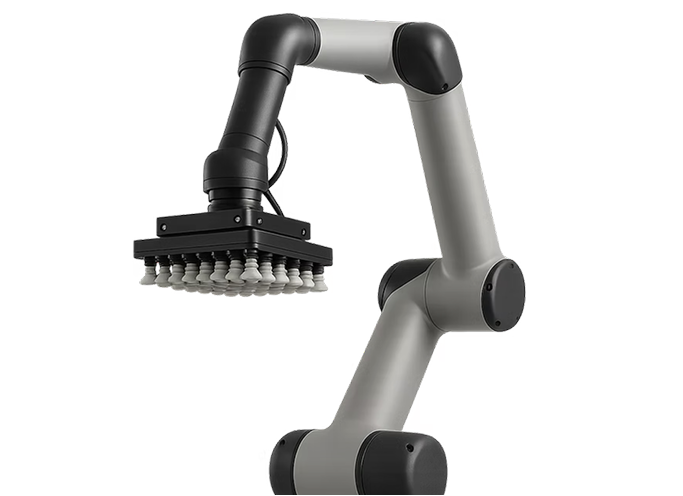
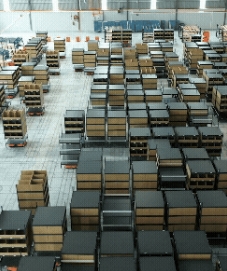
ROBOTIC ARM 99%+ ACCURACY
Robotic arms pick 600–800 items per hour, 4–6x faster, with 99%+ accuracy to reduce errors.
ALPOS ONE SYSTEM, DRIVING ALL
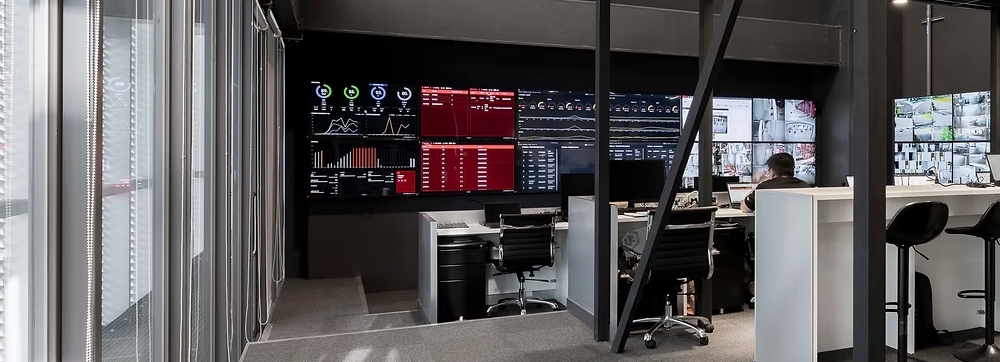
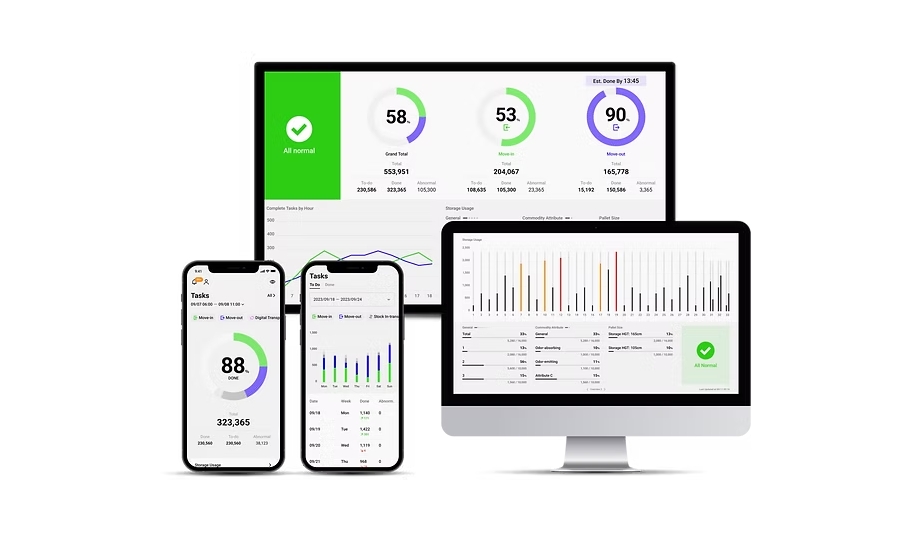
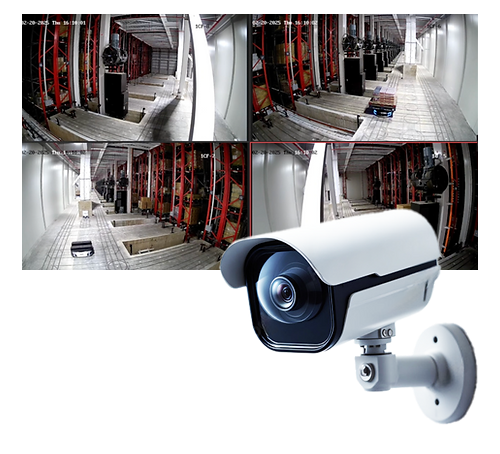
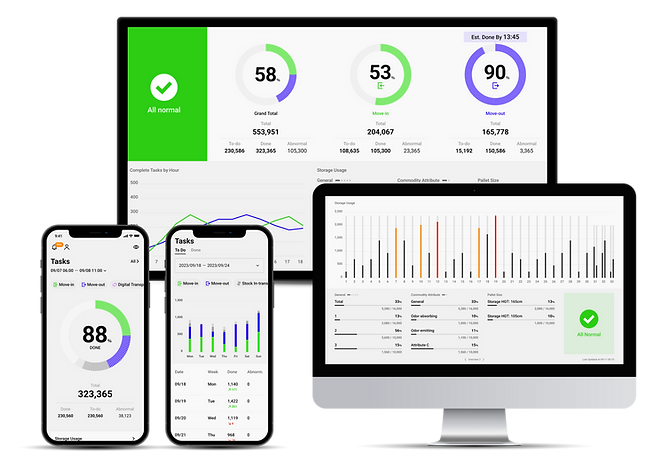
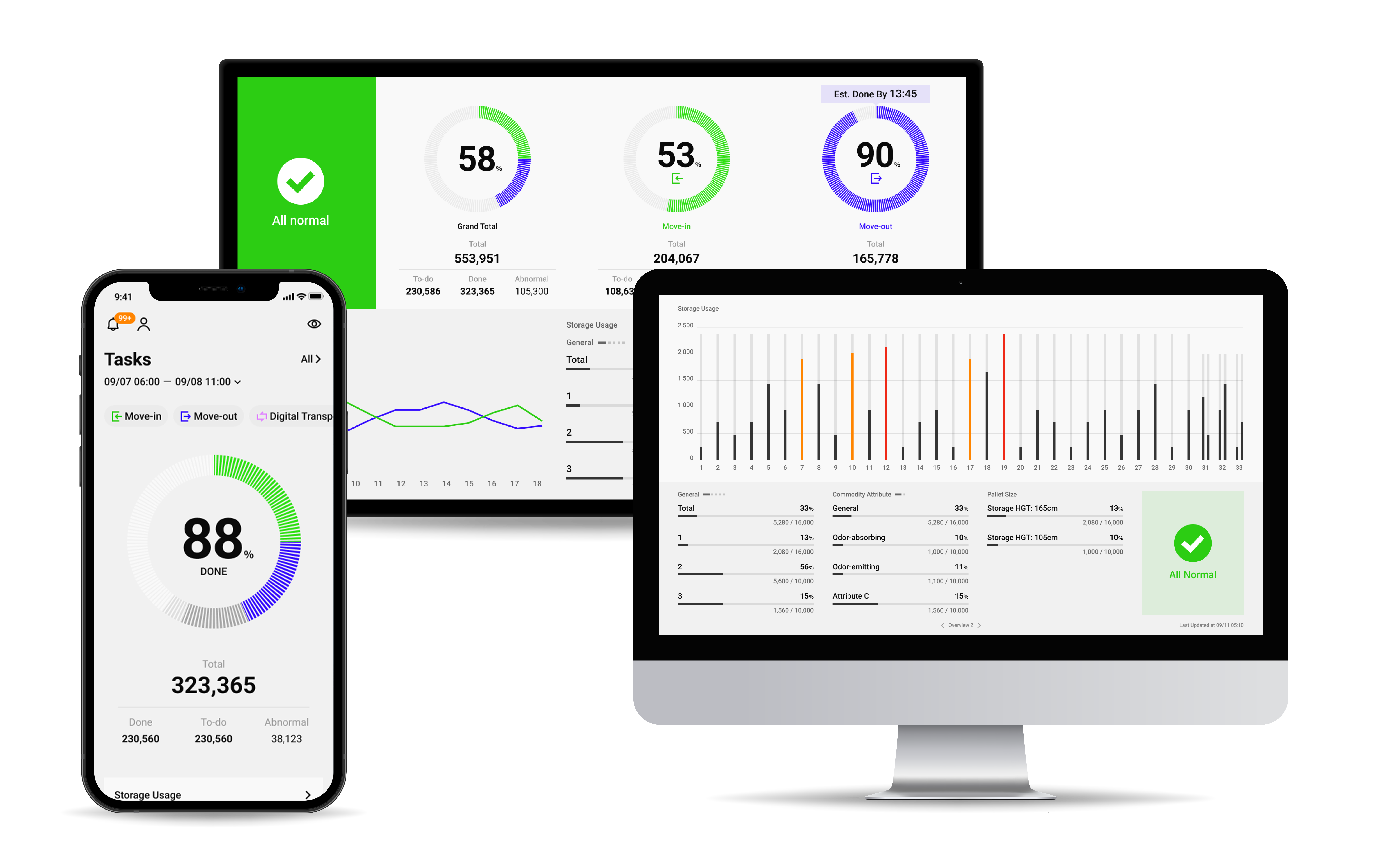
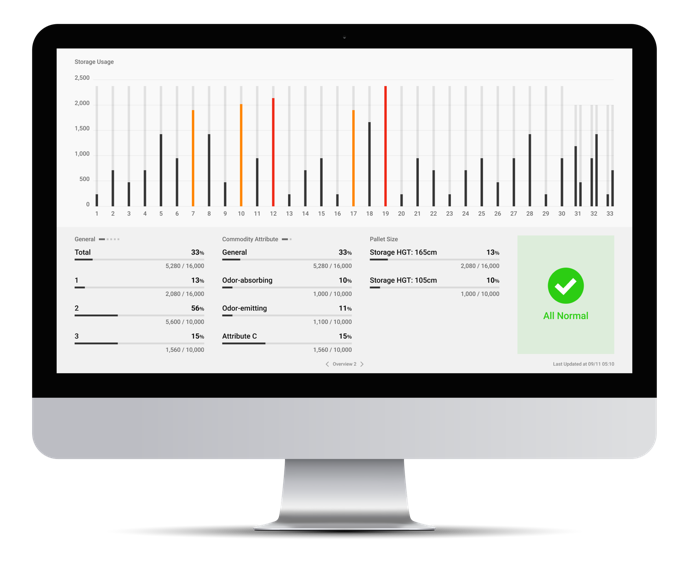
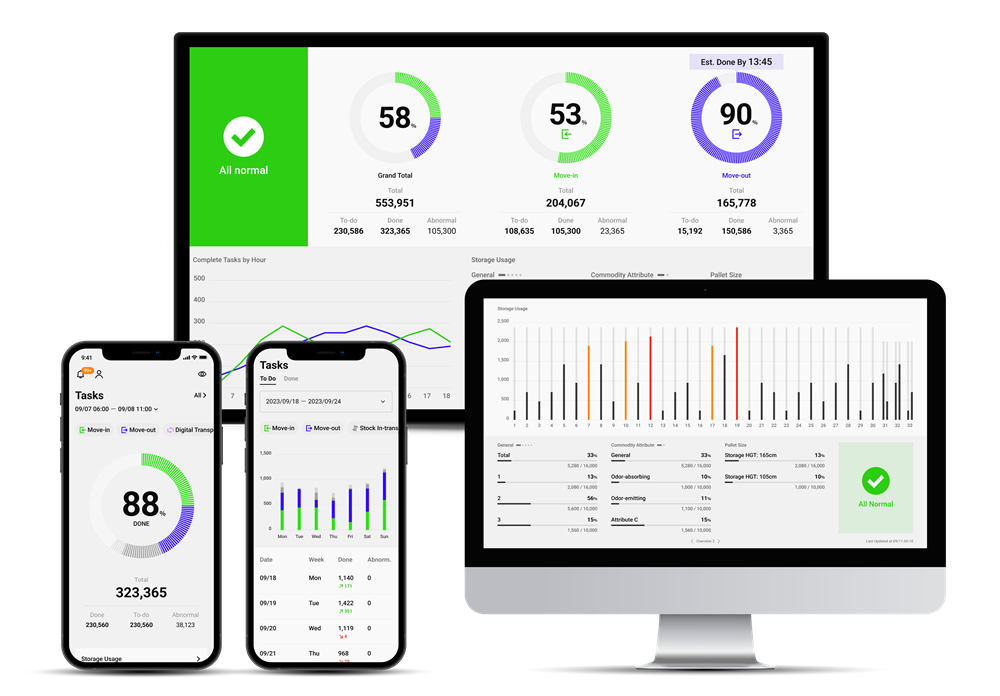
ALPOS connects AS/RS, AGVs, IPort/OPort, and robotic arms into a fully integrated smart system, enabling real-time monitoring and scheduling for zero-delay operations, while consolidating warehouse data to optimize routing and resource utilization.
DIGITAL APPLICATION
DIGITAL APPLICATION
Via Cluster Effect and Digitalization
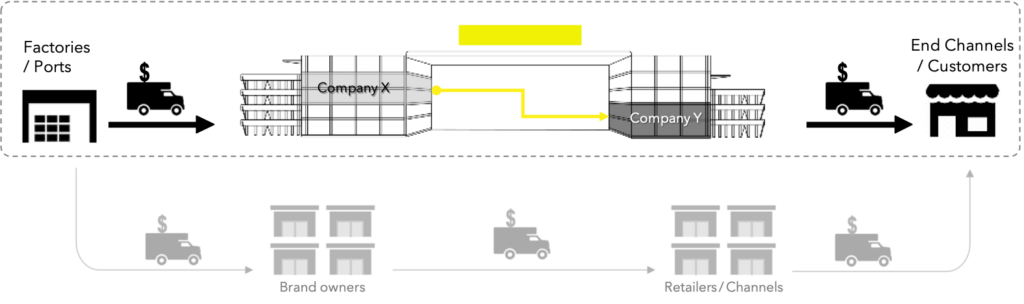
OMEGA enable digital transport to shorten the supply chain and reduce carbon footprint via cluster effect and ALPOS.
STOCK COUNT
IT PLATFORM: ALPOS
DIGITAL TWIN
SIMULATION FOR FUTURE FORECASTS
By combining digital twin models with big-data analysis of past customer demand patterns and fluctuation frequencies, we are able to forecast changes in customers’ future operations and evaluate automation performance.
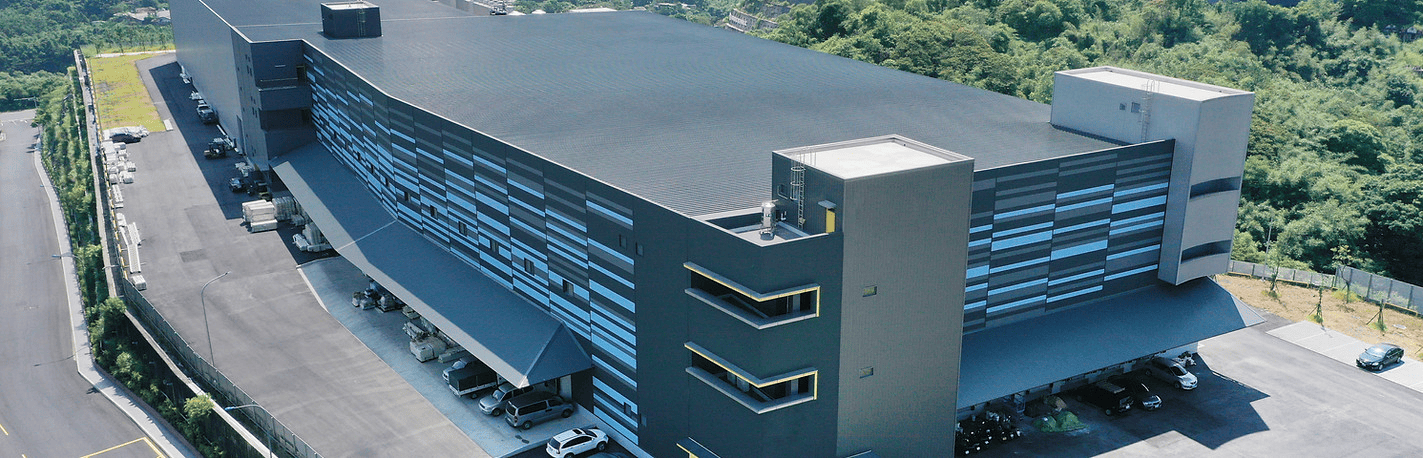
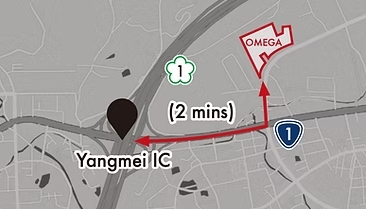
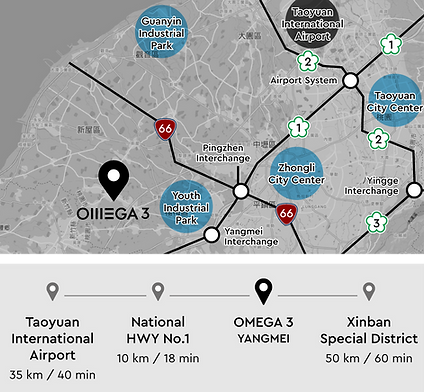
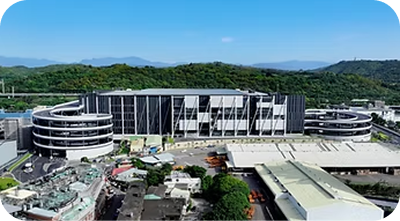
National Highway No.1: 0.9 km (2 mins) To Taipei City: 51 km (35 mins)
To Taoyuan Int'l Airport: 28 km (20 mins)
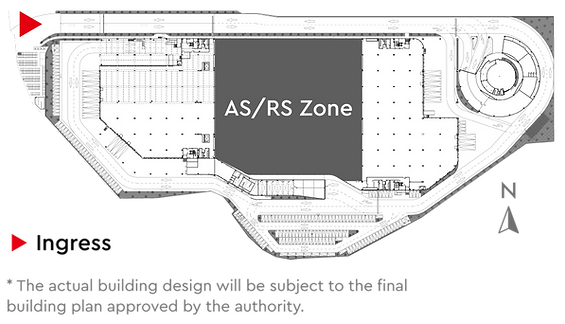
AS/RS ZONE PALLET POSITION
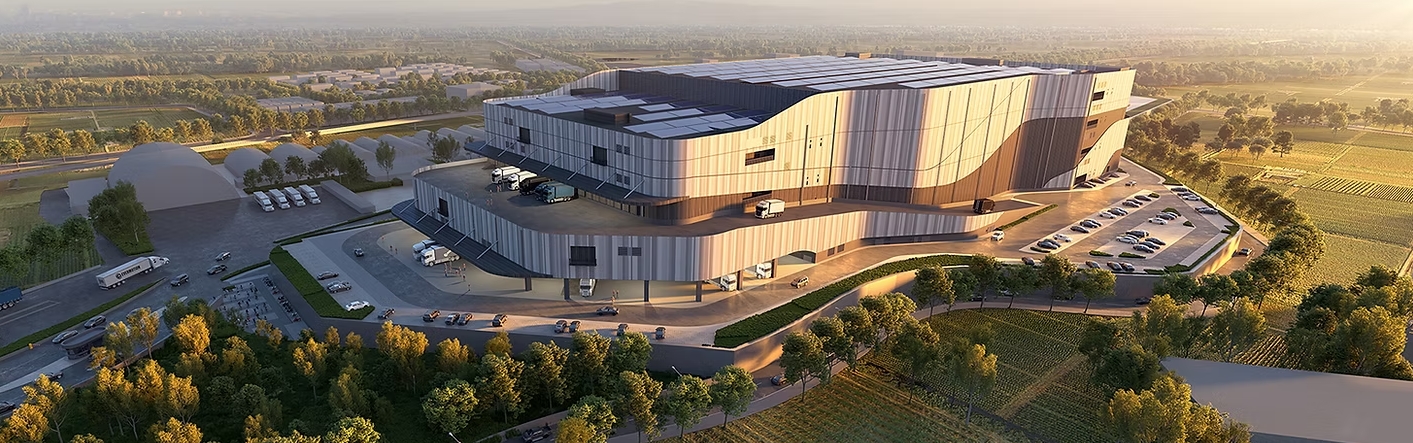
Approx. 80,000 pallets
CRANE
30 single deep + 3 double deep
LEASABLE AREA
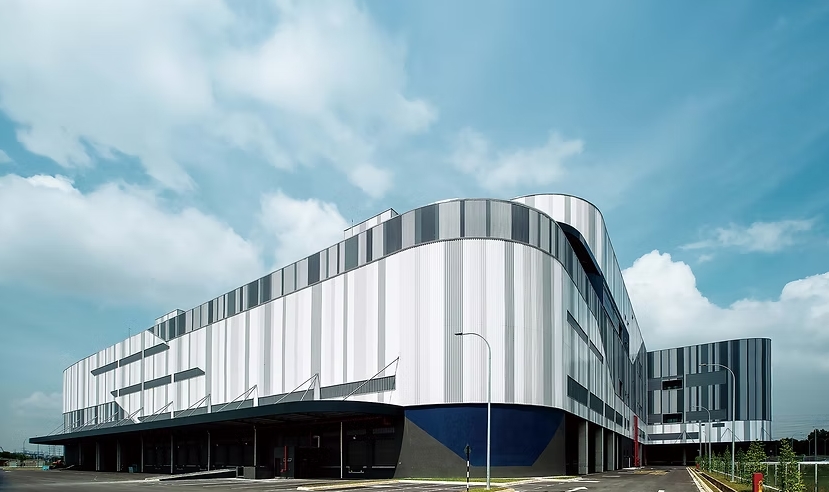
Approx. 112,900 sqm
FLOOR HEIGHT
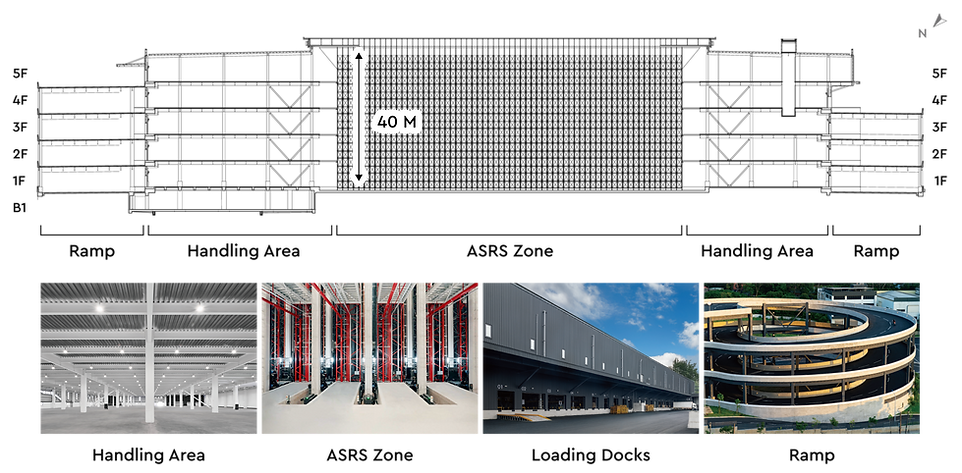
7.2 m (Under Beam: 6.1 m) / ASRS Zone: 40 m
FLOOR LOADING
1.2 ton/sqm
NUMBER OF LOADING DOCKS
174 docks
LOCATION
SECTION PLAN
BUILDING INFORMATION
倉儲資訊表格
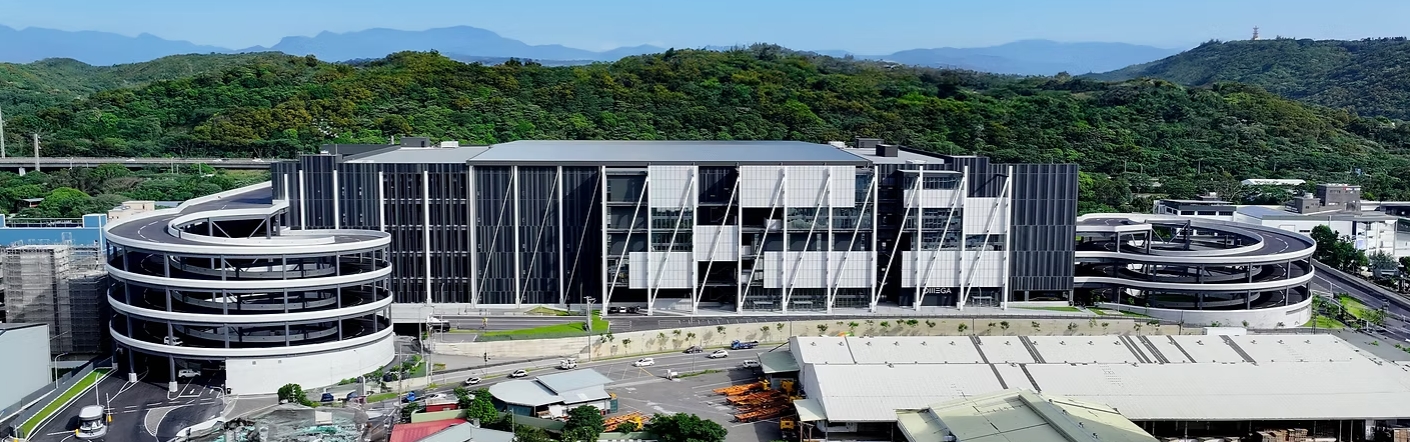
Location
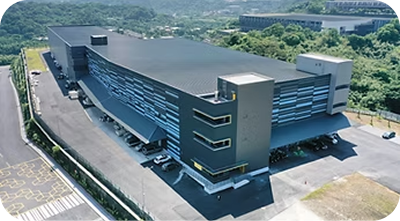
No. 647, Sec. 3, Minfu Rd., Yangmei Dist., Taoyuan
Floor Height
6.60-9.90m
Total Building Area
Approx. 23,000 ping
AS/RS Zone Pallet Position
65,000 pallets
AS/RS Storage Dimensions
1.0*1.2m & 1.1*1.1m
Floor Loading
1.2~1.5 ton/sqm
Number of Loading Docks
138 docks
Target Completion
Q3 2025
LOCATION
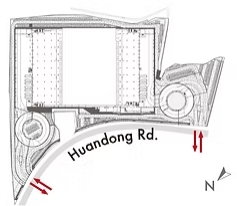
SITE PLAN
SECTION PLAN
BUILDING INFORMATION
倉儲資訊表格
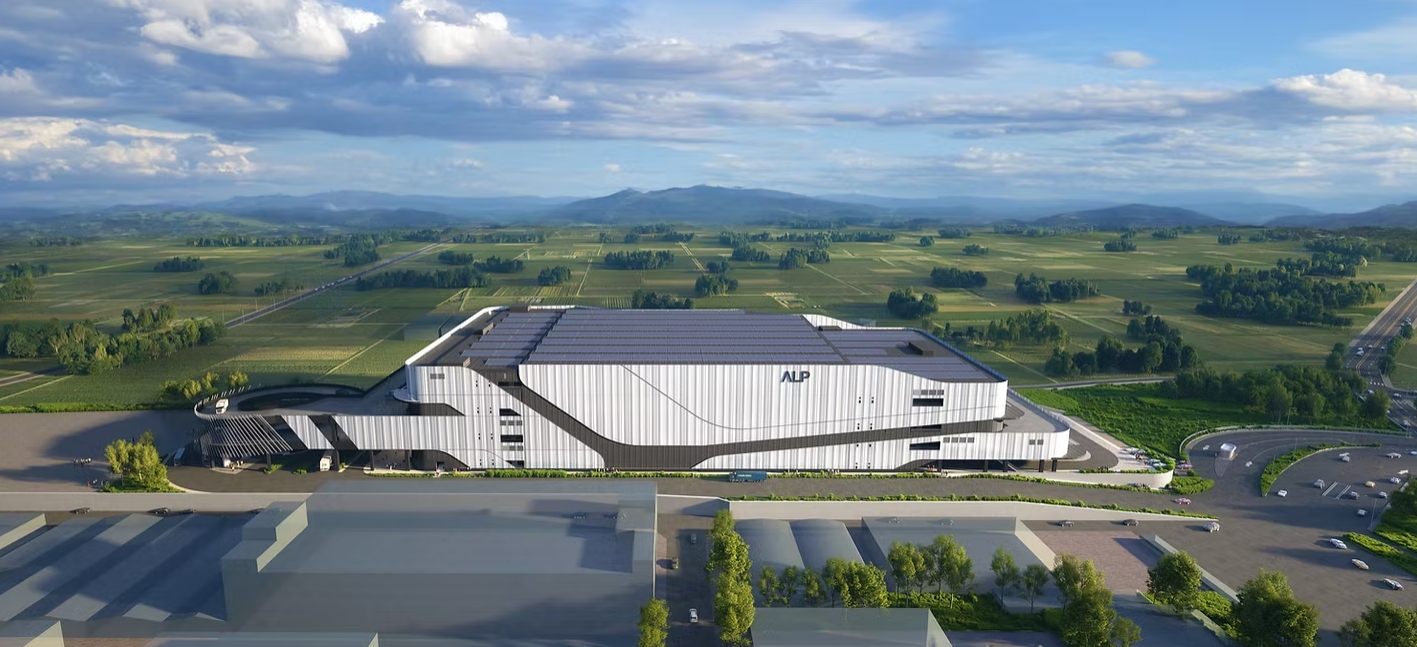
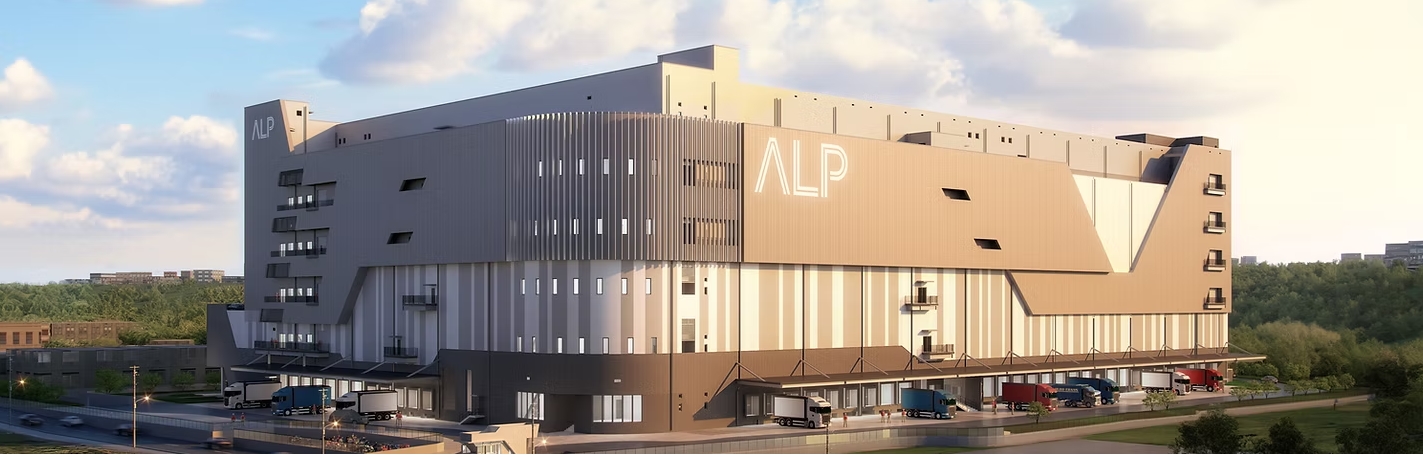
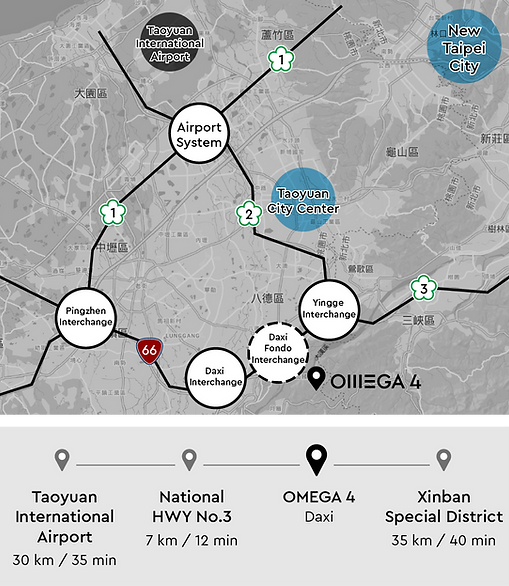
LOCATION
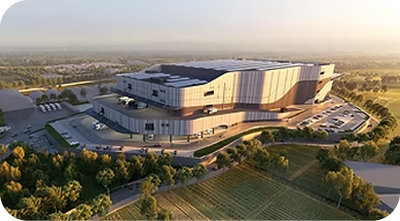
No. 513, Daying Rd., Daxi Dist., Taoyuan City
FLOOR HEIGHT
7.2m
TOTAL BUILDING AREA
Approx. 24,000 ping
AS/RS ZONE PALLET POSITION
20,000 pallets
AS/RS STORAGE DIMENSIONS
1.0*1.2m
TEMPERATURE
Ambient to -25°C
FLOOR LOADING
1.0 ton/sqm
NUMBER OF LOADING DOCKS
83 docks
TARGET OPENING
Q3 2026
LOCATION
SITE PLAN
SECTION PLAN
BUILDING INFORMATION
倉儲資訊表格
ADDRESS
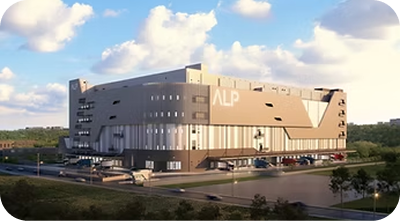
OMEGA 1 Bukit Raja, 2, Jalan Keluli 2B/KU2,
Taman Perindustrian Bukit Raja Selatan,
41050 Klang, Selangor
AS/RS ZONE
Over 100,000 pallet positions
OPEN WAREHOUSE
Over 1.2 million sq ft of Net Leasable Area
CLEAR CEILING HEIGHT
Up to 12.5 m
FLOOR LOADING
Up to 30 kN/sqm
NUMBER OF LOADING DOCKS
Approx. 200 docks
NUMBER OF PARKING LOTS
Approx. Car: 600 lots / Motorcycle: 300 lots
BUILDING COMPLETION
October 2024
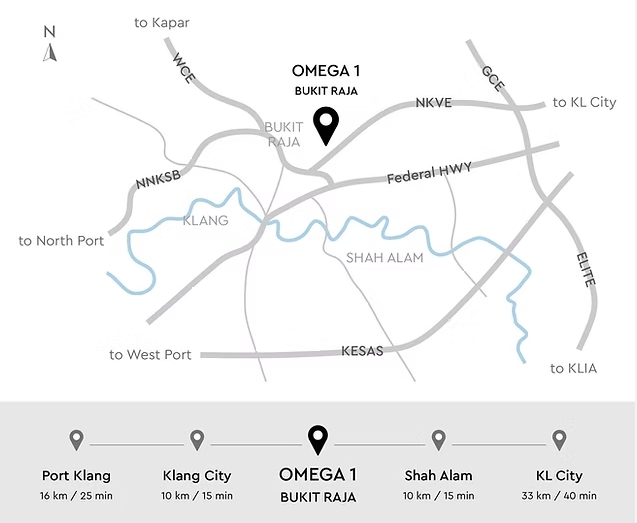
LOCATION
OMEGA 1 Bukit Raja is situated strategically for warehousing and logistics within Klang Valley, Selangor, offering the best possible alternative route, efficiently linking the supply chain network to all directions of Malaysia via
– West Coast Expressway (WCE) – North Klang Valley Expressway (NKVE) – Federal Highway – New North Klang Straits Bypass (NNKSB)
SECTION PLAN
BUILDING INFORMATION
倉儲資訊表格
Phase 1 (Building A,B)
Phase 2 (Building C)
STORAGE TYPE
Ambient
Cold Chain
AS/RS ZONE PALLET POSITIONS
Over 140,000 pallets
Over 19,000 pallets
NET LEASABLE AREA (NLA)
130,000 sqm. (excl. AS/RS Zone)
15,000 sqm. (excl. AS/RS Zone)
CLEAR FLOOR HEIGHT
From 7.8m to 10m (AS/RS Zone: 40.0 m)
From 7.2m to m (AS/RS Zone: 40.0 m)
DESIGN LIVE LOAD
Open Warehouse: 2.4 to 4 ton / sqm AS/RS Zone: 14 ton / sqm
2.0 to 2.6 ton / sqm(concentrated load)
NUMBER OF LOADING DOCKS
Over 260 docks
Over 40 docks
NUMBER OF PARKING LOTS
Car: Over 550 lots Motorcycle: 800 lots
Car: Over 270 lots
TEMPERATURE RANGE
-
-25 to 8°C
ADDRESS
OMEGA 1, Bangna-Trad KM.32, Bang Bo Noi, Bang Bo District, Samut Prakan 10560
LOCATION
OMEGA 1 BANGNA is strategically positioned on the busy Bangna – Chon Buri Expressway, providing convenient access to Bangkok’s CBD and Thailand’s key industrial and logistics hubs. It’s the ideal location for your operations.
WELL SERVED BY NETWORK HIGHWAYS Bangna – Chon Buri Expressway Highway No. 7 Highway No. 9
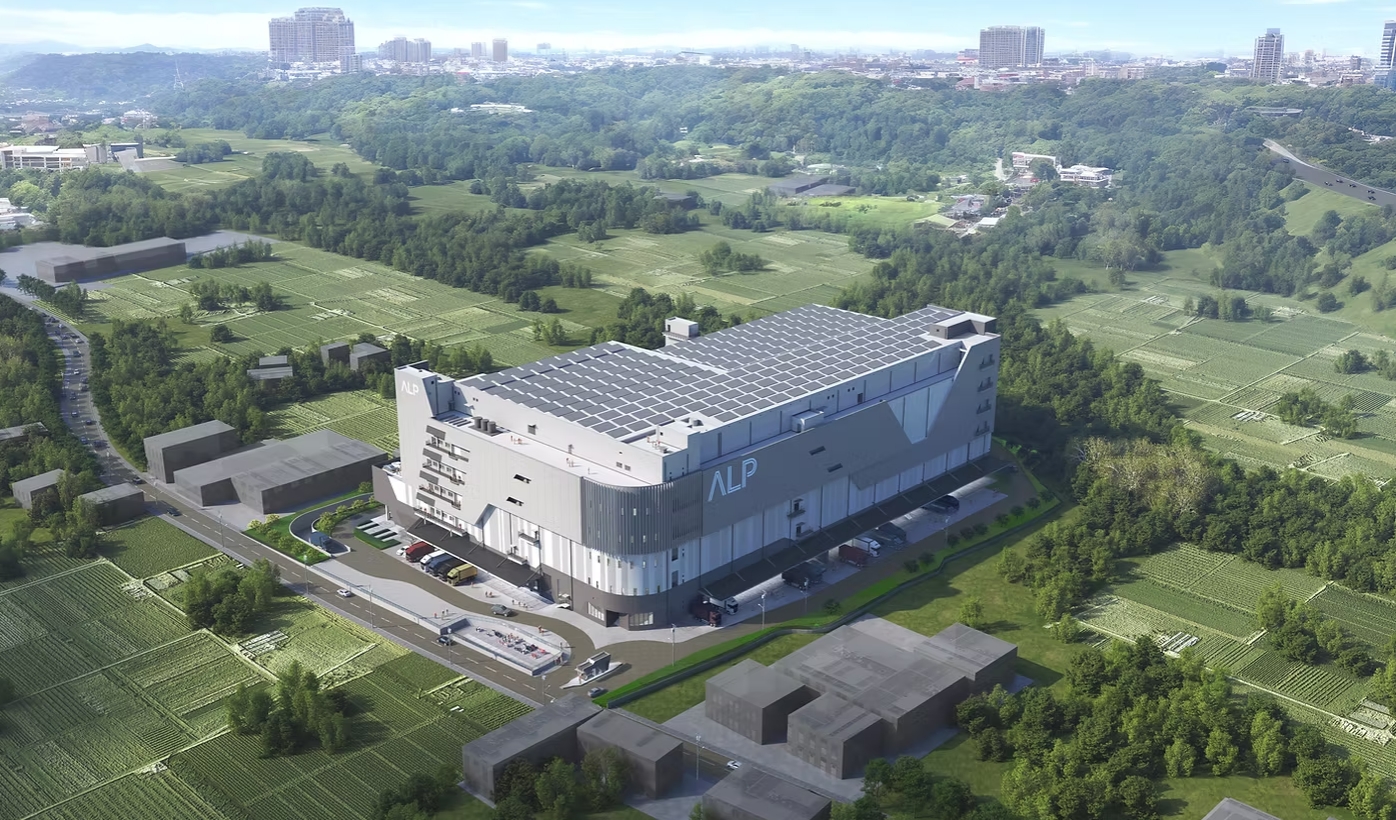
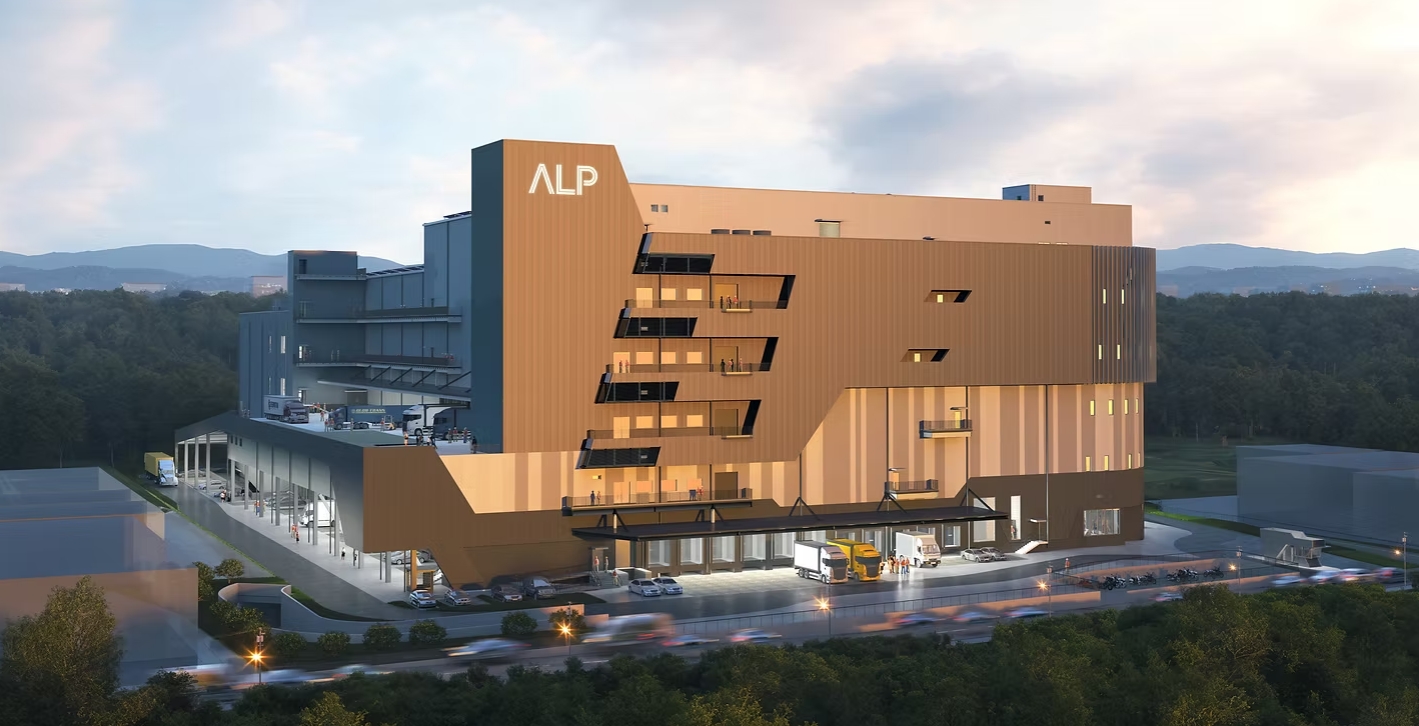
Up to 80,000 pallet positions with 40m high-bay AS/RS automation. Designed for growth. Ready for demand.
SCALABLE WITH DEMAND
By-pallet pricing for true usage-based flexibility Ideal for seasonal shifts, campaign surges, strategic pivots and long term growth.
WHEN SPACE CAN'T ADAPT, EVERY FLUCTUATION GETS EXPENSIVE.
DURING PEAK SEASONS
missed revenue, overflow storage, labor and transport costs increase as capacity runs out.
IN SLOWER PERIODS
excess space goes unused, but costs remain fixed.
WHEN BUSINESS GROWS RAPIDLY
rigid facilities fall behind, leading to relocations or premature expansion.
How ASC Transformed the Human-
Dependent Logistics Model with OMEGA
Ally Transport General Manager
Ricky Lin
Labor Shortages and Opaque Processes Constrained Growth
“Our biggest challenge was always manpower.”
Warehouse staffing was a constant struggle — it could take five or six months to fill a single position. Peak seasons made it worse: urgent hires were impossible, and operations ran at full capacity.
Heavy reliance on manual work also drove up hidden costs. More people meant more errors — misplaced pallets and mismatched records that led to time-consuming fixes, costly penalties, and lost trust from clients.
The deeper issue was that processes lived in people’s heads. All of these operations were immaterial. Without a system and means of data tracing, we couldn’t track incidents or plan capacity effectively. Scaling up was nearly impossible.
OMEGA and ALPOS Delivered a Ready-to-Run System
“What sets OMEGA apart is that we didn’t have to build the system ourselves. Automation is already built in from Day 1.”
Our previous model depended on people and experience, not process and data. OMEGA changed that by providing a complete operational framework: not just hardware, but a warehouse designed as a business platform.
Its automation capability, large-scale pallet positions, and standardized workflow modules addressed the core bottlenecks faced by 3PL operators. We replaced human experience with system logic, and guesswork with data-driven visibility.
Rather than forcing a complete overhaul, it offered a scalable and stable foundation — a way to visualize results and continuously improve what we do.
OMEGA came pre-equipped with the operational backbone that most 3PLs spend years developing.
From People-Dependent to Systemized Operations
Integration was faster than expected. ALPOS functioned as a plug-and-play system. In fact, we were able to go live using only Excel as our initial interface.
Staff now monitor real-time warehouse status via the ALPOS app — no more switching between WMS, WES, and BMS.
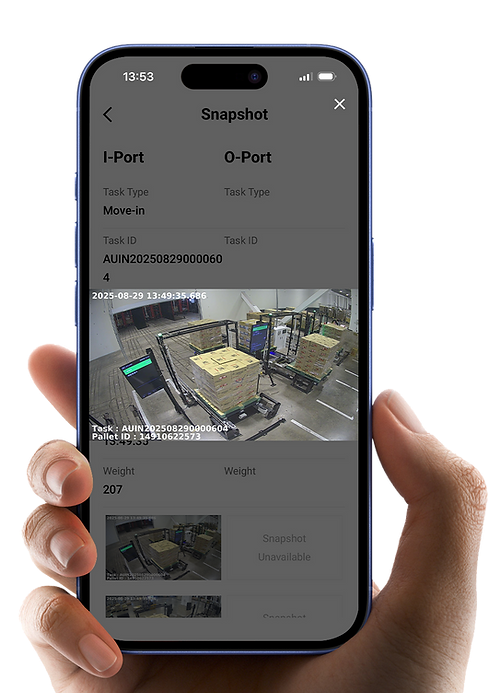
Repetitive and error-prone manual tasks, especially pallet put away and retrieval, have been replaced by AS/RS and AGV systems. Every task is automatically triggered and tracked through ALPOS, ensuring complete process transparency.
Each process change could be verified with data, shifting our management culture from “gut feeling” to “evidence-based decision-making.”
Efficiency, Flexibility, and Stability Empowered Larger Client Growth
“The most visible difference with OMEGA is efficiency and stability.”
1. 3–4× Higher Throughput
Where a skilled forklift operator once handled 15–20 pallets per shift, the synchronized workflow of AGVs and operators now delivers 3–4× higher throughput.
2. 100% Accuracy, Lower Hidden Costs
AS/RS automation has also driven picking accuracy to 100%, virtually eliminating rework and effectively cutting hidden costs.
3. Scalable & Stable Operations
With over 80,000 pallet positions and modular infrastructure, OMEGA allows us to scale without disruption. During peak seasons, we can flex capacity by adding AGVs or I/O ports — no need to increase manpower linearly.
That reliability gives us the confidence to take on larger, more complex accounts as well as high-growth channels once deemed too risky.
Scaling the Business with OMEGA
“In the past, we often hesitated to take on complex, multi-client operations, given the potential risks inherent in projects of that scale.”
OMEGA proved its reliability through both normal and peak cycles, giving us the confidence to handle major clients.
It didn’t just solve the labor problems; it helped our team build a data-driven culture.
“OMEGA gave ASC the confidence to take on clients’ growth and operate with a data-driven mindset.”
— Ally Transport General Manager, Ricky Lin
Standardization and System Integration Are Now Essential to Drive Smart Logistics
Dematic Director of Business Cooperation Asia & China
Cindy Huang
Fragmented Information and Non-Standard Processes Block Automation Adoption
“The greatest barrier to warehouse automation is the lack of foundational readiness.“
We’ve seen many companies without centralized IT systems, scattered and inconsistent data formats, and a patchwork of container types and process standards across departments. Each division often operates under its own logic, making holistic integration difficult.
For SMEs, this challenge is even greater. Limited budgets prevent investment in warehouse systems or process design. As a result, automation projects frequently stall before they even begin.
Standardized Hardware Paired with Flexible Software Integration
“ALP made automation straightforward: standardized hardware for a fast start, flexible software for our needs, secure data, and lower upfront costs.”
To overcome this barrier, ALP partnered with us to deliver a hybrid approach: standardized where possible, flexible where needed. Clients can quickly launch automation with off-the-shelf container systems, pre-integrated equipment, and a ready-to-deploy warehouse structure—minimizing upfront investment.
On the backend, ALP’s software integration capabilities allow us to fine-tune workflows, configure client-specific requirements, and maintain data security. Beyond efficiency, automation significantly reduces human error—critical in quality-sensitive markets like Japan, where mistakes often trigger costly claims or service failures. Drawing from ALP’s track record across e-commerce, manufacturing, retail, and pharma, we are able to cross-apply lessons learned to new sectors—delivering faster insight and more targeted solutions.
Co-Design, Iteration, and Execution Grounded in Reality
“They are both advisor and operator, shaping the plan and staying on the floor to make it work.”
In a joint project for a major Japanese restaurant chain in Taiwan, the rule was strict: products could not leave a -25 °C environment for more than 30 minutes. Our systems meet such requirements when planned and used correctly. Many buyers invest in automation but lack end-to-end expertise, which wastes capital. ALP solved this by designing across warehouse layout, process flow, and seasonal demand.
Before build, ALP ran digital twin simulations to validate throughput, dwell time, and thermal exposure. In operations, their team monitored performance, resolved issues in real time, and tuned software and workflows to hit the targets.
Importantly, ALP is willing to invest early. Even if initial iterations miss the mark, their team remains committed to refining the solution until it fits.
This willingness to “fail forward” leads to better outcomes and ensures solutions are fully validated before go-live.
Lower Barriers, Faster Adoption, and Higher Customer Confidence
“Partnering with ALP and Dematic delivers proven equipment, integrated planning, and accountable operations.”
With standardized hardware and integrated services, we shorten timelines and reduce risk. Clients avoid building warehouses or systems from scratch and can deploy automation in weeks.
Confidence grows from real cases and transparent designs. Hesitant prospects move forward, accelerating adoption. In a trust-sensitive market, this credibility is a competitive advantage.
ALP Is a Practical Partner with the Courage to Innovate
“Together, we keep raising the bar through collaboration and shared ambition.”
Working with ALP delivers proven automation with accountable operations. We share ownership from design to uptime. Together we diagnose issues, adjust scope, and stay until they are resolved. This standard is vital in precision markets such as Japan.
We do not dress this up with buzzwords like ‘long-term value creation.
If we had to explain why we chose ALP in one sentence, it’s this: They make sure every problem gets solved, “clearly, thoroughly, and completely.”
— Dematic, Director of Business Cooperation Asia & China Cindy Huang
The Key Driver of Logistics Automation Is Now Shifting from Cost Control to Labor Shortages, Especially in Japan
Murata L&A Sales Department Senior Manager
Hiroshi Hasegawa
Compared with Food & Pharmaceutical Companies, Retailers Often Lack Technical Literacy and Struggle to Define Their Real Logistics Needs
Labor shortages have become structural, and raising wages is no longer an effective remedy. As a result, companies pursue automation not to cut costs but to achieve business objectives: shorter lead times, smoother peak handling, and better customer experience.
Japanese clients choose partners based on shared purpose and cultural alignment, not just technical capability. The understanding of automation varies by industry—food, retail, and general merchandise players often lack technical literacy and need help identifying root problems before design begins; in contrast, pharma and high-value goods companies are highly technical, with low error tolerance and well-defined requirements.
Operationally, Japan’s logistics standardization is on par with Taiwan’s, especially in reusable containers. However, Japan’s preference for higher-quality plastic pallets over wooden ones affects design considerations for automation and on-site integration.
Centered on Understanding Customer Intent, Delivering Integrated Logistics Solutions Tailored to Each Client
“ALP’s approach helps clients move forward without heavy upfront risk.”
Our previous model depended on people and experience, not on process or data. OMEGA changed that by providing a complete operational framework — not just hardware, but a warehouse designed as a business platform.
We chose OMEGA because its automation, storage capacity, and operating logic directly addressed the core bottlenecks faced by 3PL operators. With over 80,000 pallet positions and standardized workflow modules, it lets us replace experience with system logic and guesswork with data.
Rather than forcing a complete overhaul, it offered a scalable and stable foundation — a way to see and continuously improve what we do.
By Combining Pre-Built Facilities with Simulation-Based Risk Design, Projects Can Be Implemented Immediately and Safely
For retail and general merchandise clients with limited technical understanding, we start by aligning on the service goals: What lead time is acceptable? What peak volume must be handled? Which errors are intolerable?
This ensures the solution addresses the right problem, not just sells equipment. Once objectives are clear, ALP’s engineering team co-designs the system through simulation—testing flow, capacity, and performance under real operational conditions.
For highly technical sectors like pharma, co-design focuses on detailed parameters and fail-safes; for retail, we emphasize service-level clarity—how automation secures delivery commitments and isolates tenant risks. The process is not a parts list—it’s a service plan built around outcomes, validated through engineering precision and simulation.
Lower Investment Barriers and Risk Transparency Have Improved Client Confidence and Accelerated Adoption
When solutions are directly tied to client priorities—lead-time reduction, peak resilience, or service quality—adoption grows quickly. In cold storage and frozen goods, where labor shortages are most severe, automation rollout has accelerated noticeably.
For OMEGA’s shared AS/RS model, once risk isolation and cross-tenant safety mechanisms were explained, even conservative clients viewed it as a low-capital, low-risk entry point for testing and scaling automation.
While this case did not include quantified KPIs such as lead-time reduction or uptime ratios, we recommend defining these jointly in future projects to strengthen the evidence chain and demonstrate measurable ROI.
“I Recommend This Partnership—It’s Innovative, Yet Meticulous in Execution.”
“We confidently recommend ALP to Japanese clients for three reasons. First, ALP is willing to challenge convention and invest in innovation, which aligns with our own development-driven culture. Second, they don’t just stop at designing, they operate OMEGA themselves, which makes their solutions practical and grounded. Third, there are no communication gaps. Their engineering, systems, and simulation capabilities allow them to explain and execute complex automation with clarity.
In Taiwan, our collaboration with ALP has already proven that this customer-first approach works. We believe the same engineering rigor and partnership mindset can serve Japanese enterprises aiming for long-term logistics optimization.”
Murata, L&A Sales Department Senior Manager,
Hiroshi Hasegawa
OMEGA: Building Trust in Warehouse Automation with Unified On-Site Operations and IT Teams
Ally Logistic Property Senior Vice President
Hsinming Huang
Ally Logistic Property Smart Logistics Technology Assistant Vice President
Vincent Hsieh
The First Gate to Automation: Unfamiliarity and Uncertainty
“For many companies, the hardest part of moving to automation is not the technical details of hardware, but more fundamentally, trust and understanding.”
Processes must be mapped again, operating methods feel unfamiliar, and teams worry about smooth integration with 3PL platforms. In shared warehouses that serve multiple clients, the “Noisy Neighbor” effect is also a common concern.
This unfamiliarity and anxiety are strongest for first-time adopters. It can slow the project and weaken leadership confidence in the expected efficiency gains.
OMEGA is designed for this problem. It combines software, hardware, and on-site maintenance into a single, comprehensive solution. The approach is clear, practical, and reliable, so companies can take the first step with confidence and make steady progress thereafter.
IT and On-Site Operations Two Pillars of Stability
1. All-in-One ALPOS: Ending the Patchwork Problem
From the start, ALP understood that a stable automated logistics infrastructure is not achieved by buying equipment alone. Stable automation cannot depend on a single team or a single device. It requires cross-functional collaboration: the IT team builds and improves the system, and the on-site operations team monitors and troubleshoots around the clock.
These efforts come together in ALP’s ALPOS platform. ALPOS is an All-in-One system that replaces layered and fragmented setups. It is built on a modular architecture, so new equipment and systems can be added with flexibility. ALPOS brings together Warehouse Execution System (WES), Billing Management System (BMS), and Dock Management System (DMS). It connects to multiple automation subsystems and exposes open interfaces, so client systems can integrate smoothly with plug-and-play readiness.
This design is complete yet flexible. It addresses long-standing pain points such as high integration cost and hard-to-maintain architectures.
2. Four-in-One A DevOps Model for Logistics
Real adoption of automation needs a complete stack. It includes equipment, control software, and a 24/7 on-site operations team. Beyond software and hardware, every OMEGA site is staffed by a round-the-clock team that trains users, simplifies operation, resolves incidents in real time, and brings field feedback back to IT. This creates a closed loop for continuous improvement.
The model is similar to DevOps in software. The wall between development and operations is removed. ALP goes further by aligning equipment, IT, operations, and business execution. This creates a DevOps model for logistics and allows OMEGA to improve as a living platform.
From Reactive Fixes to Proactive Control How Human and Machine Work Together
1. Needs Assessment and Flexible Design: Plug and Play with ALPOS
OMEGA starts with a needs assessment. ALP and the client review warehouse and transportation workflows together, identify bottlenecks caused by labor or process design, and estimate the benefits after automation goes live.
ALPOS follows a model of standardization with flexible options. About 80 percent of common warehousing needs are standardized. Clients can move in and start using the system right away. This avoids months or years of integration work. The remaining 20 percent is covered through open interfaces and focused customization.
This approach lowers the barrier to adoption, shortens integration, and prevents duplicate investment. ALPOS supports Excel uploads, APIs, and connections to WMS and TMS. This makes fast deployment possible for all clients.
2. On-Site Training and Proactive Prevention. A 24/7 Operations Team
Stable operations after go-live depend on what happens on site. With a service mindset and a leasing model, ALP provides long-term support and assurance. This encourages closer collaboration and clear ownership.
Our 24/7 operations teams have moved from reactive troubleshooting to proactive prevention. With IoT partners, we install sensors on equipment to collect vibration and current data. Machine learning compares normal patterns with abnormal ones and warns of issues before they occur. Without predictive monitoring, an AS/RS motor failure can cause up to two days of downtime. With predictive maintenance, we repair during off-hours and keep the impact on client operations low.
3 . Two-Way Collaboration. A Closed Loop Between People and Systems
Two-way collaboration between IT and on-site operations keeps OMEGA improving after launch. The operations team brings field insights. The IT team adjusts parameters and processes based on those insights. This data and field loop stabilizes performance and drives continuous improvement.
OMEGA is also designed for replication across sites. Each warehouse has local primary and backup systems. The IT team provides remote support. On-site teams run in 24-hour shifts. Clients can reach steady-state operations in a short time.
Proof Through Data and Experience. OMEGA Results and Metrics
1. Stability Proven in the Market A frequent early concern is interference in a multi-tenant environment. Over a full year serving major retail and e-commerce clients, OMEGA recorded no performance drops or bottlenecks caused by a “neighbor effect.”
Three safeguards support this outcome. The initial warehouse capacity is provisioned beyond any single tenant’s needs. ALP allocates and controls capacity at the system level. In day-to-day operations, client peaks are often staggered, which keeps overall utilization stable.
We track MTBF and MTTR to guide improvement and to base trust on data rather than claims. Within about three months after launch, most clients move from caution to trust and begin operating with confidence.
2. Implementation Process: From Two Years to Two Weeks Building and integrating automation and IT in-house can take up to two years. With the standardized ALPOS platform, a full deployment can be finished in about two weeks. In simple cases, same-day activation is possible.
This difference saves time and headcount. It also lowers digital transformation risk and lets clients shift resources to the core business sooner.
3. “Drink Our Own Champagne” Self-Validation Ensures Quality Before any new solution is released, we test it in real operations at our subsidiary Ally Logistic Service. We adjust until we find the most stable and effective model, and then we standardize it for market rollout. In short, we “Drink our own champagne.” We use it first and prove it first. Every OMEGA deployment is shaped by real practice, with assured quality and experience.
“OMEGA Brings Together a Decade of ALP Logistics Experience in a Platform That Is Ready on Day One.”
Clients start at a mature level of smart logistics as soon as they come on board.
We want every partner to feel that OMEGA is a proven capability with complete support. It carries ALP professionalism and accountability. That is what makes us distinct.”
─ ALP, Hsinming Huang & Vincent Hsieh
JAPAN
倉儲資訊表格
Land Size
32,000 sqm
AS/RS Zone
8,700 pallet positions
Type of Storage
Cold chain
Total Floor Area
22,000 sqm
No. of Docks
40 docks
OMEGA: PRIVACY is Never Compromized with Sharing
ALWAYS YOURS. ALWAYS PROTECTED.
PALLET TRACKING WITH DE-IDENTIFIED LABELS
Efficiency is needed, but not at the cost of exposure.
Your product data always remains within your WMS. We only track de-identified codes, ensuring strict segregation and zero leakage risk. Even with SKU-level services, your privacy is fully protected, our integrations are isolated for each customer, guaranteeing complete data security.
ZONE-BASED PRIVACY CONTROL
Individual handling zone. Human-free storage zone. Secured by ALP.
OMEGA separates handling and storage into two distinct zones. Each client exclusively owns and operates their handling space with no shared access. The storage zone is shared but fully automated, independently managed by ALP with no human access and continuous monitoring.
SYSTEM CONTINUITY
Resilient architecture with real-time defense and compliance readiness.
OMEGA is certified under ISO 27001 / 27701 and aligns with GDPR standards. Distributed infrastructure and anomaly detection minimize downtime across critical operations. Regular penetration testing reinforces system resilience.
PRIVACY IS NEVER COMPROMISED WITH SHARING
EFFICIENCY IS ESSENTIAL, BUT NEVER AT THE RISK OF EXPOSURE.
Shared infrastructure may accelerate speed, yet goods, flows, and data must remain unseen by others.
DATA IS CONFIDENTIAL.
SPACE MUST BE, TOO.
For business-critical operations, privacy isn’t optional — it is the foundation of trust.
OMEGA DELIVERS ACCURACY AT SCALE
BUILT IN FOR ZERO-ERROR FULFILLMENT.
IT SYSTEM : ALPOS
Standardized Workflows
ALPOS applies consistent logic to every task, ensuring systematic execution across teams and shifts.
IT SYSTEM : ALPOS
Standardized Workflows
ALPOS applies consistent logic to every task, ensuring systematic execution across teams and shifts.
DIGITAL TWIN
Real-Time Synchronization
System and floor stay synced in real time,
Any action on-site is instantly reflected in data.
WHEN OPERATION DEPEND ON HUMAN, ACCURACY BREAKS.
EXECUTION VARIES
Inconsistent actions lead to unstable outcomes.
NO SYSTEM CONNECTION
Manual actions aren’t tracked, and operations lose sync.
ERRORS GO UNSEEN
Without system traceability, mistakes go unnoticed.
OMEGA BOOSTS OPERATIONAL EFFICIENCY
AUTOMATE THE FLOW. OPERATE NONSTOP.
2X FASTER OUTPUT
Human-Machine Collaboration
OMEGA combines automation with human workflows, transforming sequential labor tasks into parallel operations. This enables scalable throughput that grows with demand, not with workforce size.
24/7 SYSTEM STABILITY
ALPOS End-to-End Coordination
ALPOS coordinates across AS/RS, AGVs, and AI-powered optimized pallet placement to enhance productivity, reduce handoff delays, misalignment, and manual confirmation errors across shifts and workloads.
FAST ONBOARDING
PLUG-and-PLAY Deployment
Connect directly to existing WMS or ALP’s built-in system, enabling immediate access to OMEGA’s hardware, software, and automation infrastructure. Storage and handling tasks take only a few lines of code, eliminating integration delays and reducing IT complexity.
WHY TRADITIONAL OPERATIONS CAN'T KEEP UP?
PEOPLE ARE SCARCE
Logistics work is repetitive and uninspiring. Warehousing jobs compete with better-paying, less physical roles.
PEOPLE MAKE MISTAKES
Manual tasks lead to errors and delays. Fatigue and inconsistency increase risk in daily operations.
PEOPLE COME AND GO
High turnover leads to constant re-training. Experience is lost when senior workers leave.